Accessibility
Best Bidets for Accessible Bathrooms
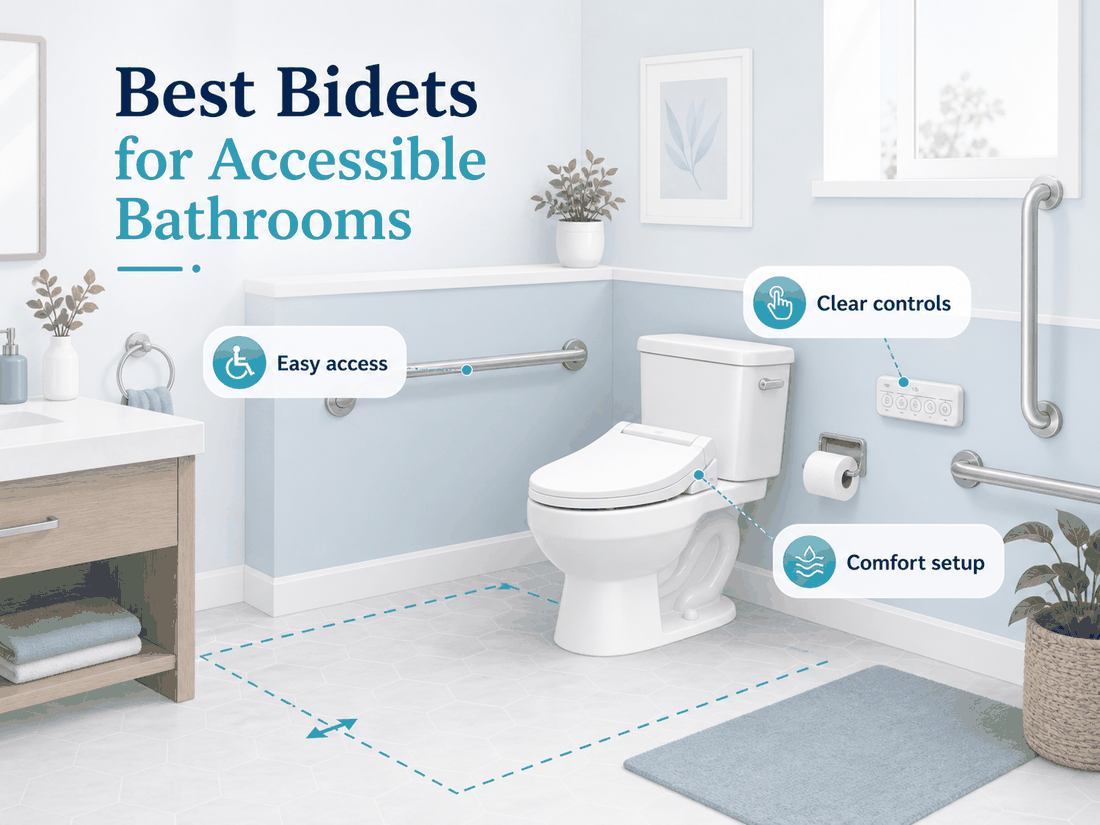
An accessible bathroom bidet should support independence where possible and make assistance easier where needed. That usually means clear controls, low pressure, a dryer, stable fit, and a bathroom layout that does not force awkward reaching.
BestBidets may earn a commission from qualifying purchases. Product details can change; confirm current specs, fit, and safety information with the manufacturer or retailer before buying.
Start here
For accessible bathrooms, choose a bidet around the user’s reach, mobility, vision, grip, and drying needs. A remote electric seat is often best, but installation and control simplicity matter more than luxury features.
Quick picks
| Situation | Best direction | Watch-out |
|---|---|---|
| Limited reach | Remote electric seat | Remote must be easy to see |
| Grip difficulty | Avoid squeeze bottles/sprayers | Dryer matters |
| No outlet | Gentle attachment or portable | Less independence than electric |
Fit the bidet to the user
Accessibility is not one feature. A good choice depends on whether the user can sit safely, reach controls, understand buttons, dry afterward, and keep the routine predictable.
- Remote location
- Button size
- Low pressure defaults
- Seat stability
- Nightlight if needed
Best features
The most useful accessible-bathroom features are the ones that remove physical steps: dryer, warm water, remote, nozzle position, and easy stop.
- Dryer reduces wiping.
- Warm water feels less startling.
- Nozzle position reduces shifting.
- Nightlight helps at night.
What to avoid
Avoid bidets that require twisting, gripping, aiming, or guessing. That often rules out handheld sprayers and portable bottles for users with mobility or grip limits.
- Tiny remotes
- Hard-to-reach side panels
- High-pressure defaults
- Unstable seat fit
Installation notes
Accessible bathrooms often deserve professional installation. A bidet that wobbles, leaks, or has a messy cord route undermines the whole point.
- Check outlet location.
- Check seat height and stability.
- Keep cords and hoses out of movement paths.
- Choose a remote over a hard-to-reach side panel when mobility is limited.
- Look for clear buttons, presets, and gentle pressure control.
- Confirm the seat height and toilet setup still work after adding the bidet.
- Do not treat a bidet as a substitute for medical, occupational-therapy, or caregiver advice.
Caregiver lens
For accessible bathrooms, prioritize predictable controls, easy cleaning, stable seating, warm water, and the simplest possible daily routine. The best bidet is not the most advanced one; it is the one the user can operate confidently every time.
The most common mistake is buying a bidet that technically has the right features but is hard to operate from the actual seated position. A remote that can be mounted where the user naturally reaches is often better than a side panel. A gentle, predictable spray is usually better than maximum pressure. A dryer that reduces wiping may matter more here than it does for a young, fully mobile buyer.
When people discuss bidets for older adults, caregivers, recovery, or limited mobility, the conversation is usually not about fancy settings. It is about reducing bending, twisting, wiping, reaching, and awkward cleanup. Large-button remotes, user presets, warm water, heated seats, and a usable dryer matter because they reduce steps in a routine that may already be difficult.
What matters most in accessible bathrooms
This is where small bathroom details matter. Fit, clearance, water pressure, outlet access, and ease of cleaning often decide whether the bidet feels like a smart upgrade or an awkward add-on.
Final take
For accessible bathrooms, the best bidet is usually a remote-control electric seat with warm water and a dryer, installed cleanly and set to gentle defaults.
Related guides
FAQ
What bidet is best for accessible bathrooms?
Often a remote-control electric seat with dryer and low pressure.
Are handheld sprayers accessible?
Not for many users, because they require grip, aim, and hose control.
Should I hire a professional?
Often yes if stability, outlet work, or leak risk matters.