Maintenance
Bidet Maintenance Guide
Bidet maintenance is not complicated, but it is not zero. Clean it, inspect water connections, watch pressure changes, and replace worn parts before they become problems.
The short version
Maintain a bidet by cleaning the nozzle and seat area, checking hoses and T-valves for moisture, keeping remotes dry, replacing batteries or worn parts when needed, and rinsing/drying portable bidets after use.
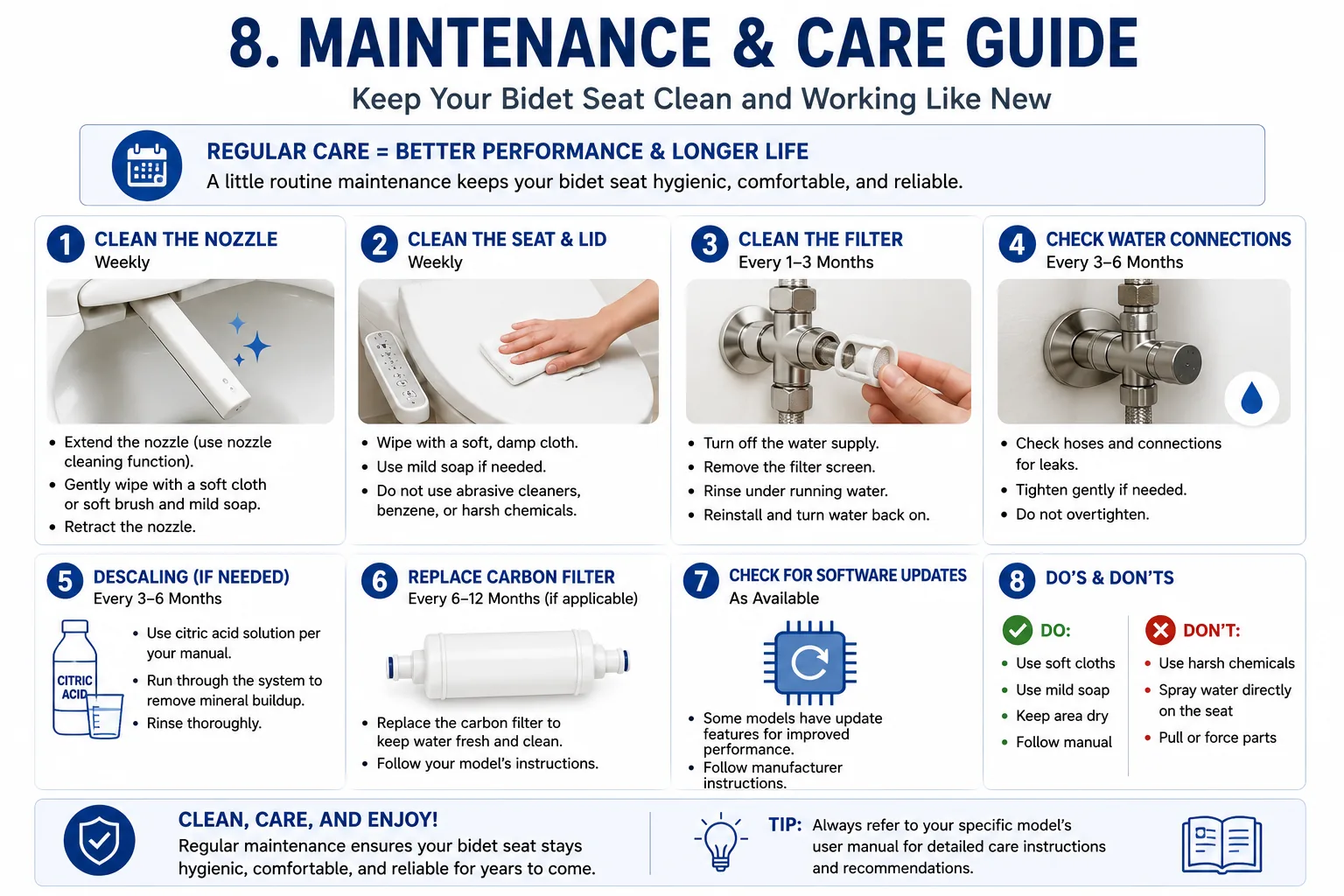
Simple maintenance routine
| Frequency | What to do |
|---|---|
| Regular bathroom cleaning | Clean nozzle area, seat underside, controls, and surrounding toilet. |
| After installation or adjustment | Check every water connection with a dry paper towel. |
| Monthly or as needed | Inspect hoses, T-valves, remote batteries, seat stability, and pressure changes. |
| After portable use | Empty, rinse, dry, and store clean. |
Parts to watch
- Nozzle: uneven spray can mean buildup.
- Hose: replace if cracked, kinked, bulging, or damp.
- T-valve: one of the most common leak-check points.
- Remote: keep dry and replace batteries when response weakens.
- Dryer outlet: keep clear and clean if accessible.
- Seat mount: tighten according to the manual if it wobbles.
Electric bidets
Electric seats need the same water checks as attachments plus basic appliance common sense. Keep electronics dry, do not pinch the cord, follow the manual for filters or cleaning modes, and pay attention to error lights or sudden temperature changes.
When to replace parts
Replace cracked hoses, worn washers, leaking fittings, unreliable sprayer triggers, damaged cords, cracked portable bottles, or nozzles that no longer clean or spray correctly. Do not keep using damaged water or electrical parts.
The practical verdict
The best maintenance habit is inspection during normal cleaning. If a part carries water, check it. If it has electronics, keep it dry. If it is portable, rinse and dry it after use.
What long-term owners actually maintain
Most bidet maintenance is small, but it is not zero. The long-term issues people mention tend to involve weak spray, mineral buildup, dirty nozzle areas, remote batteries, filters, or plastic surfaces that start looking dull because they were cleaned too aggressively. Higher-end seats are still bathroom appliances, and they reward gentle routine care.
The most useful maintenance habit is simple: treat the bidet like a combination of toilet seat, small appliance, and plumbing connection. Wipe it gently, clean the nozzle area, check for moisture near fittings, replace remote batteries when controls get flaky, and pay attention if water pressure changes.
A realistic maintenance rhythm
- Weekly: wipe the seat, lid, remote, and visible nozzle area with a gentle bathroom-safe cleaner or damp soft cloth.
- Monthly: inspect hose connections, the T-valve, and the floor around the toilet for any sign of moisture.
- Every few months: use the nozzle-cleaning mode if available and check whether spray strength has changed.
- As needed: replace remote batteries, clean filters if the manual recommends it, and descale only according to manufacturer guidance.
- Avoid: abrasive pads, harsh scrubbing, soaking the remote, or treating plastic bidet parts like porcelain.
This is not a high-maintenance product category, but the owners who stay happiest tend to build a light cleaning routine instead of waiting for a weak spray, sticky control, or grime around the hinges.