Installation guide
Can You Install a Bidet Yourself Without a Plumber?
Sometimes, yes. Many simple bidet attachments and seats are designed for homeowner installation. But the boring details decide whether DIY is smart: shutoff valve condition, water connection, toilet fit, outlet access, and how comfortable you are checking for leaks.
BestBidets may earn a commission from qualifying purchases. Product details can change; confirm current specs, fit, installation instructions, and safety information with the manufacturer or retailer before buying.
Quick take
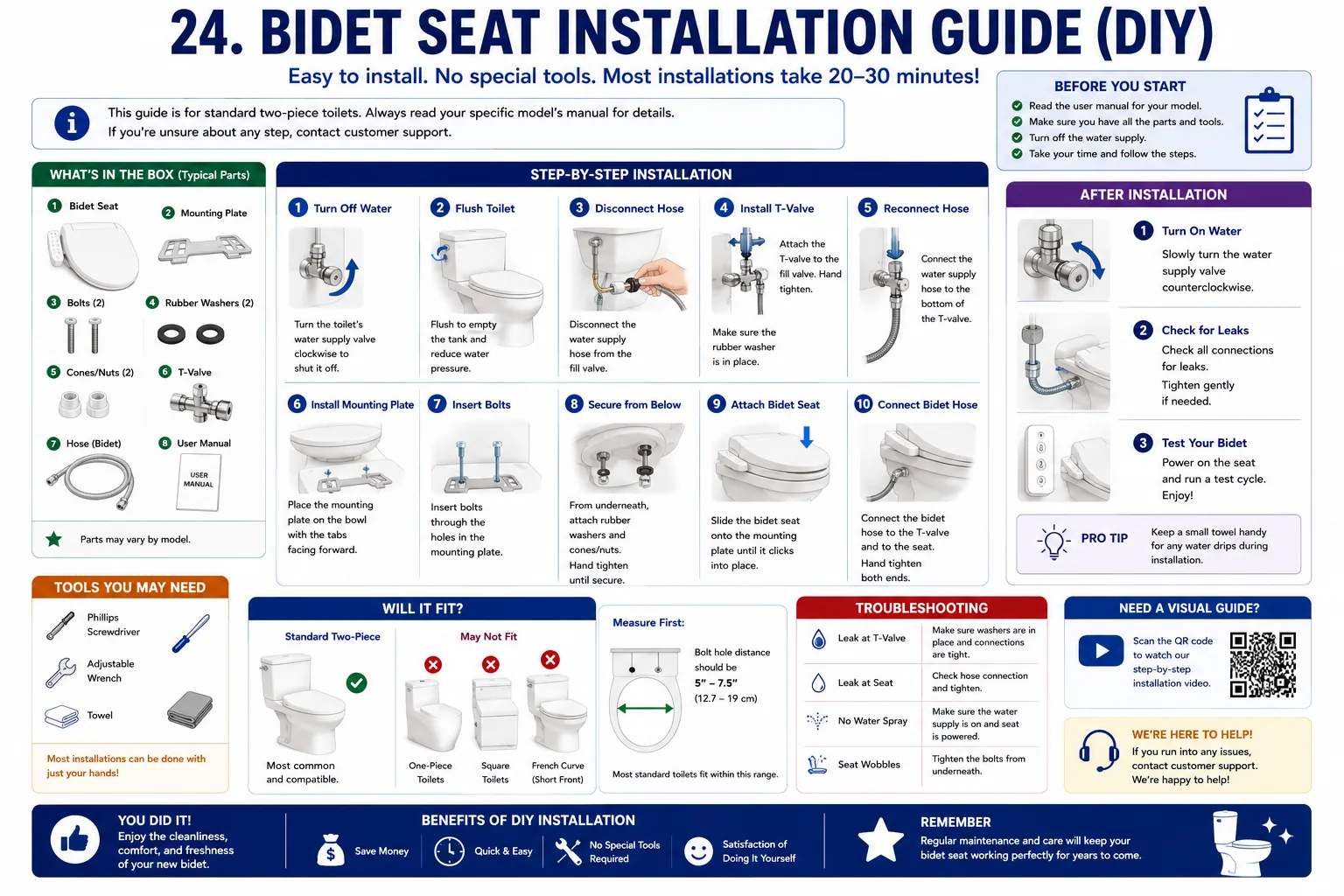
You can often install a basic non-electric attachment yourself if the toilet is modern, the shutoff valve works, the seat bolts come off cleanly, and you can check for leaks. Call a plumber for old plumbing, stuck valves, leaks, rigid lines, or anything that feels forced.
DIY difficulty by bidet type
| Bidet type | DIY outlook | Watch out for |
|---|---|---|
| Portable bidet | Easy | No install, but less convenient for daily home use. |
| Non-electric attachment | Often DIY-friendly | Old shutoff valves, tight bathrooms, cross-threading, leaks, and seat wobble. |
| Non-electric bidet seat | Moderate | Seat fit, tank clearance, and water-line connection. |
| Electric bidet seat | Moderate if the outlet already exists | Outlet location, cord routing, tank clearance, remote placement, and water connection. |
| Hot-water attachment | Usually harder | Routing a hot-water line from the sink can be awkward and unattractive. |
Check these before you take anything apart
- Can you turn the toilet shutoff valve off and back on easily?
- Are the supply line and fittings flexible, clean, and not corroded?
- Will the seat bolts come off without forcing them?
- Is the toilet round or elongated, and does the bidet match?
- Is there enough tank clearance behind the seat?
- Will a side control hit the vanity, tub, wall, or toilet paper holder?
- For electric seats, is there a proper nearby outlet without an extension cord?
When to call a plumber
A plumber makes sense when the plumbing is old, stuck, leaking, or difficult to access. Paying for help is frustrating, but water damage is worse, especially in upstairs bathrooms and apartments.
- The shutoff valve is stuck, corroded, or dripping.
- The supply line is rigid, old, or hard to remove.
- You see leaks before the bidet is installed.
- You are in an apartment where a leak could affect another unit.
- You cannot get fittings aligned without force.
When an electrician matters more than a plumber
For electric seats, the water connection may be manageable while the power situation is the real problem. A safe, nearby outlet is part of the setup, not an optional upgrade. A cord running across the bathroom may technically power the seat, but it is not the clean or safe long-term answer.
Apartment and renter note
If you rent, DIY is not just about tools. Check the lease, keep original parts, avoid drilling remote mounts, and choose a removable setup you can explain during maintenance or move-out.
Bottom line for DIY installation
You can install some bidets yourself without a plumber, especially simple attachments on healthy modern plumbing. But do not turn a comfort upgrade into a plumbing gamble. If the valve, fittings, outlet, or toilet fit looks questionable, choose portable, call a pro, or pick a simpler model.
Owner reality check: DIY is easy until one detail is not
Many owners install simple attachments and non-electric seats themselves, especially on standard two-piece toilets with accessible shutoff valves. The job often sounds intimidating because it connects to water, but the basic process is usually seat off, water off, T-valve on, hose connected, leak check done.
The problems start with the exceptions: old shutoff valves, stiff supply lines, awkward skirted toilets, cross-threaded connections, missing clearance, rental restrictions, or electric models with no outlet. Those are the cases where a “simple” install can turn into a hardware-store run or a plumber call.
Electric seats add another layer. Mounting the seat may be DIY-friendly, but adding an outlet is not a casual DIY job for most homeowners. A clean, safe outlet placement is often what separates a polished upgrade from a messy cord situation.
Practical buying takeaway
DIY a bidet when the toilet is standard, the valve is accessible, and no electrical work is needed. Call help when the plumbing is old, the toilet is unusual, or the install needs a new outlet.
Related guides
FAQ
Can most people install a bidet attachment themselves?
Many can, as long as the plumbing is modern, accessible, and not leaking. The shutoff valve and fittings matter more than confidence alone.
Do electric bidet seats require a plumber?
Not always. But they do require a safe nearby outlet, and questionable plumbing or awkward fit can still make professional help worthwhile.
Should renters install bidets themselves?
Only if the lease allows removable plumbing accessories and the bathroom setup is low risk. Portable bidets are safer when rules or plumbing are uncertain.