Fit first
Can My Bathroom Support a Bidet?
Most bathrooms can support some form of bidet, but not every bathroom is ready for every kind of bidet. Start with the room before comparing models.
BestBidets may earn a commission from qualifying purchases. Product details can change; confirm current specs, fit, installation instructions, and safety information with the manufacturer or retailer before buying.
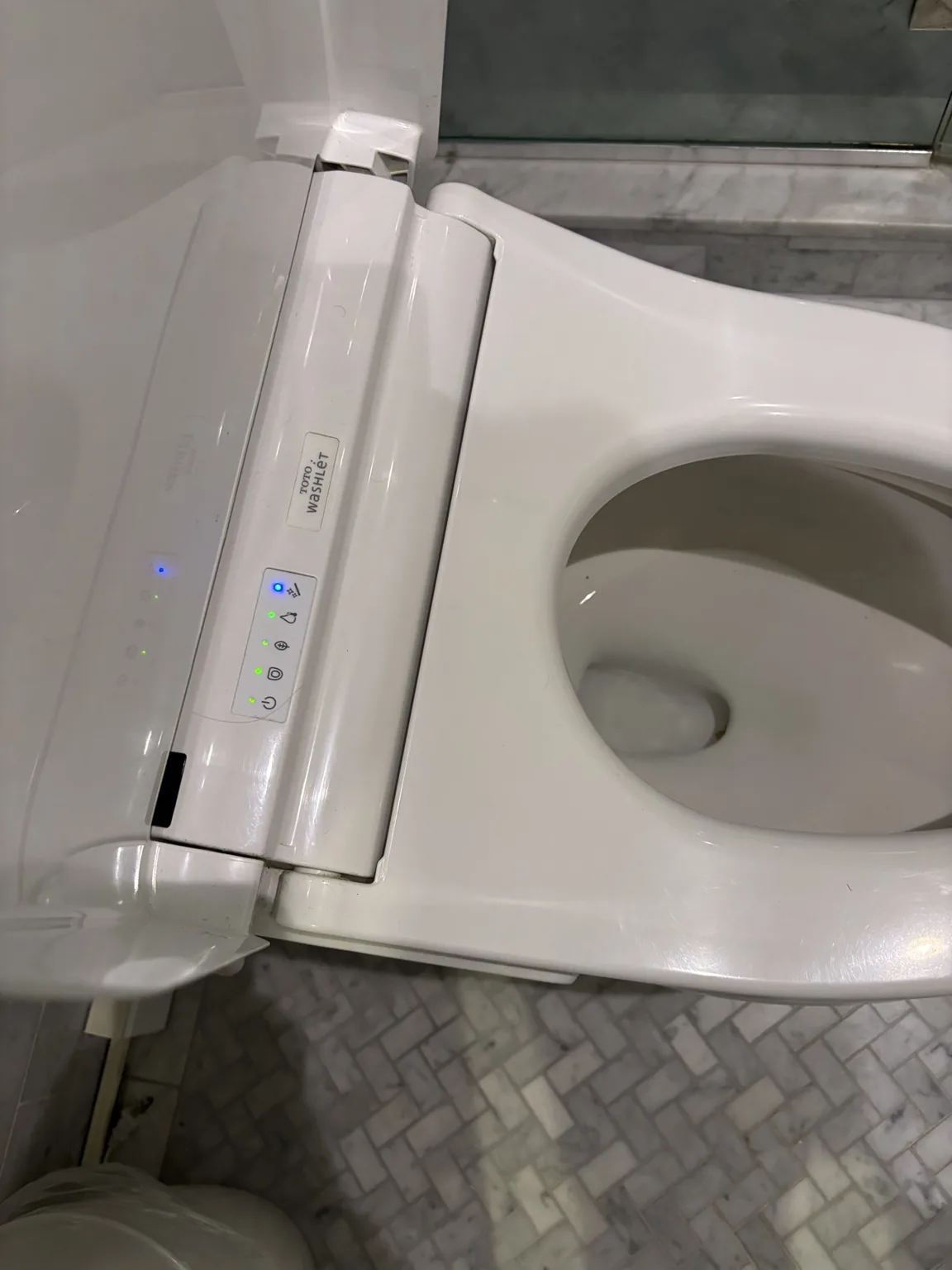

Decision check
Start with the room, not the product
Most bathrooms can support some kind of bidet, but not every bathroom should get the same type.
BestBidets may earn a commission from qualifying purchases. Always confirm fit, outlet requirements, water connection details, and current manufacturer specifications before buying.
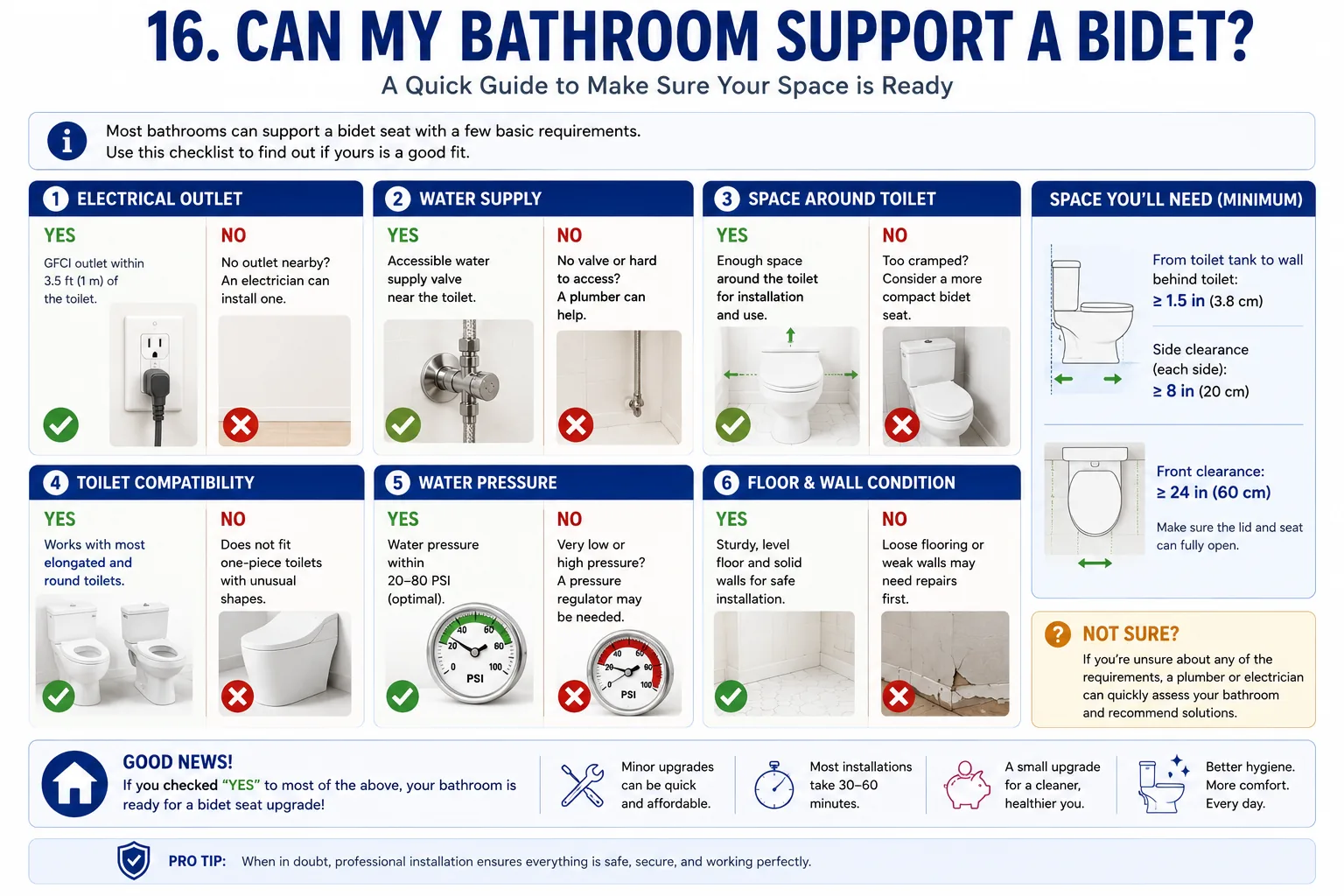
The practical answer
Your bathroom can probably support some kind of bidet. The real question is whether it supports the kind you want: a simple attachment, a non-electric seat, an electric comfort seat, or a full smart toilet.
The five checks before choosing a bidet
Bathroom support checklist
You do not need a perfect bathroom. You need enough of the right conditions for the type of bidet you are buying.
| Check | Green light | Slow down if... |
|---|---|---|
| Power | There is a nearby appropriate outlet for an electric seat. | The only outlet is across the room or already crowded. |
| Toilet shape | You know whether the bowl is elongated or round. | The toilet is skirted, one-piece, unusually compact, or hard to measure. |
| Side clearance | There is room for side controls or hose connections. | The toilet is tight against a vanity, wall, or cabinet. |
| Water access | The shutoff valve is reachable and in good condition. | The valve is stuck, corroded, hidden, or shared in an unusual way. |
| Permission | You own the home or have approval for changes. | You rent and cannot make permanent plumbing or electrical changes. |
| Check | Why it matters | Best next step |
|---|---|---|
| Toilet shape | Round and elongated seats are not interchangeable. | Measure the bowl before ordering. |
| Tank clearance | Some bidet seats need room behind the mounting holes. | Check the manufacturer's fit diagram. |
| Water access | Most installed bidets connect at the toilet's cold-water supply. | Look at the shutoff valve and supply line condition. |
| Outlet access | Electric seats need power for heat, dryer, remote functions, and nightlights. | Decide whether outlet work is acceptable. |
| Permission | Renters, condos, and shared homes may have limits. | Choose removable or no-install options when needed. |
What usually fits different bathrooms
Portable bidet
Works almost anywhere because it does not attach to the toilet. It is less polished, but it avoids fit, power, and plumbing problems.
Bidet attachment
Good when the water connection is accessible and you want a low-cost, no-outlet setup. Watch side clearance and seat alignment.
Electric bidet seat
Best when the toilet shape, tank clearance, water supply, and nearby outlet all cooperate.
Red flags to handle before buying
Tiny bathroom reality
The smaller the bathroom, the more important it is to buy for the room instead of the feature list. A premium electric seat can be the wrong choice if the outlet is awkward, the toilet is squeezed against a vanity, or the remote has nowhere sensible to live.
For tight bathrooms, the safest order is: measure the toilet, check the water valve, check the outlet, then choose the bidet. Reversing that order is how people end up returning seats or living with an annoying setup.
- The shutoff valve is old, stuck, corroded, or partly hidden.
- The toilet has an unusual shape, very tight tank clearance, or a skirted base that complicates connections.
- The only outlet is too far away for a clean cord route.
- The bathroom is a rental where plumbing or electrical changes are not allowed.
- The toilet seat hardware is rusted, stripped, or difficult to remove.
Ownership reality
The more expensive the bidet, the more important the boring checks become. A premium seat is frustrating if the cord looks bad, the bowl shape is wrong, or the shutoff valve turns a simple job into a plumber visit.
A practical decision path
| Your bathroom situation | Start here | Why |
|---|---|---|
| No nearby outlet | No-outlet bidets | Skip heated features unless you are willing to add power. |
| Primary bathroom with clean outlet | Electric bidet seats | This is where heated seats, warm water, and dryers make the most sense. |
| Rental or temporary setup | Renter-friendly bidets | Prioritize removable, low-risk options. |
| Unusual toilet or tight space | Fit guide | Compatibility matters more than model rankings. |
Bathroom support FAQs
Can any toilet take a bidet?
No. Many toilets can take some kind of bidet, but seat shape, tank clearance, water access, and installation space can rule out certain models.
What if my bathroom has no outlet?
You can choose a non-electric attachment, non-electric seat, handheld sprayer, or portable bidet. Electric comfort features require power.
Should I check fit before choosing a brand?
Yes. Fit, outlet access, and installation conditions should come before brand comparison.
Owner reality check: the bathroom matters more than the bidet box
A lot of bidet regret starts before the product arrives. Owners usually run into trouble when they assume every toilet and bathroom has the same space, outlet access, valve position, and seat shape. The bidet may be perfectly good and still be wrong for the room.
The most common friction points are simple: no nearby GFCI outlet for an electric seat, a tight shutoff valve, a skirted toilet that blocks the T-valve area, not enough tank clearance, or a round bowl when the buyer ordered elongated. In small bathrooms, side controls and cord routing can also become more annoying than expected.
The good news is that most standard toilets can support some type of bidet. The question is whether your bathroom supports the bidet you actually want: electric seat, non-electric attachment, sprayer, portable bottle, or full toilet combo.
Practical buying takeaway
Before comparing features, take photos of the toilet, outlet area, shutoff valve, tank shape, and side clearance. The right bidet is the one your bathroom can support cleanly.