Outlet placement
How Close Does an Outlet Need to Be for a Bidet?
Learn how close an outlet should be for an electric bidet and what to do if there is no outlet near the toilet.
BestBidets may earn a commission from qualifying purchases. Product details can change; confirm current specs, fit, and safety information with the manufacturer or retailer before buying.

Quick take
The right choice depends on the bathroom first. Check toilet fit, outlet reality, water access, side clearance, user needs, and whether installation is allowed before picking a model.
Quick picks
| Pick | Best for | Main tradeoff |
|---|---|---|
| Electric seat | Best comfort if compatible | Needs outlet and clearance |
| Attachment | Flexible no-outlet fit | Still needs plumbing access |
| Portable bidet | Lowest fit risk | Manual use |
| Professional help | Old plumbing or outlet work | Added cost |
| Return-friendly retailer | Uncertain fit | Requires checking policies |
What matters most
The best bidet is not always the most expensive one. A premium electric seat can be excellent in a main bathroom, but a simple attachment may be smarter in a guest bathroom, and a portable bidet may be the right answer for a strict rental.
- Check round vs elongated toilet shape before buying a bidet seat.
- Check tank clearance, seat bolts, water supply access, and side clearance.
- For electric bidets, confirm the factory cord reaches a proper nearby outlet without an extension cord.
- For renters and apartments, check lease rules and leak responsibility before installing anything.
- For sensitive-use comfort, prioritize low pressure, warm water if possible, and gentle drying.
What to look for
- Gentle low-pressure control instead of maximum spray power.
- Clear stop or off control for guests, kids, seniors, and first-time users.
- Easy-clean nozzle area, seat underside, controls, and hose routing.
- Stable fit with no seat wobble or awkward alignment.
- Good return policy in case fit or comfort is wrong.
- Manufacturer instructions that clearly explain installation, cleaning, and safety.
What to avoid
- Buying an electric bidet before checking the outlet and cord route.
- Forcing old shutoff valves, corroded fittings, or stuck toilet hardware.
- Choosing a harsh high-pressure model for sensitive-use, seniors, kids, or guests.
- Assuming a bidet attachment has heated-seat or dryer comfort.
- Using an extension cord as the permanent plan for an electric bidet.
- Skipping cleaning, maintenance, or follow-up leak checks.
Owner reality check: cord reach is less forgiving than people expect
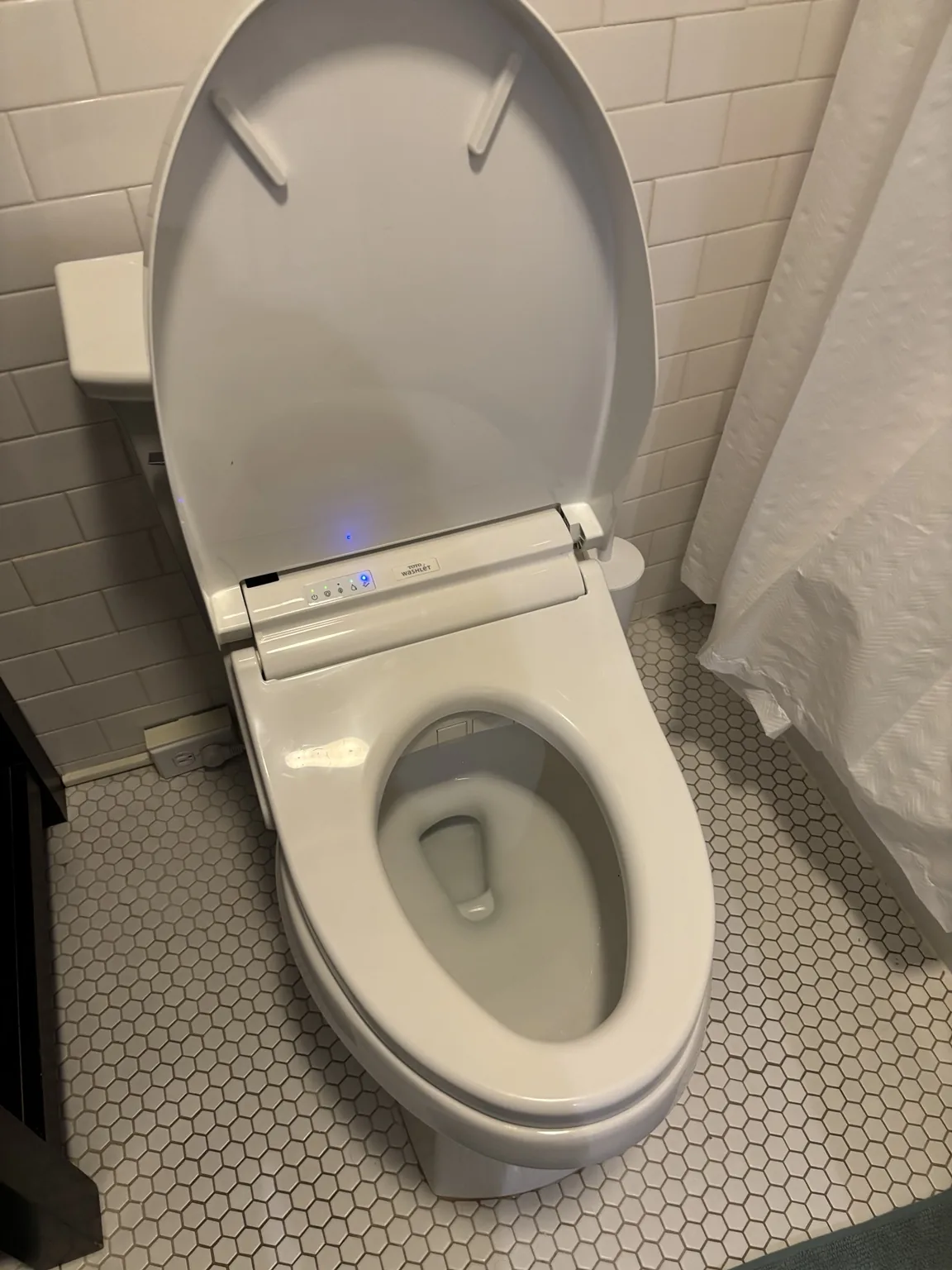
In real bathrooms, the issue is not just whether the plug technically reaches. It is whether the cord path looks clean, avoids strain, stays away from awkward traffic areas, and does not make the bathroom feel like a temporary workaround. A cord stretched across the back of the toilet or up the wall can work physically while still looking like the thing you notice every day.
Owner-style complaints usually come from people who bought the seat first and solved power second. The cleaner route is to decide where the seat's cord exits, where the GFCI-protected outlet will sit, and whether the plug can reach without tension before installation day. That is especially important for skirted toilets, tight vanities, older bathrooms, and remodels where the electrician has only one easy wall to use.
Practical buying takeaway
The outlet should be close enough that the factory cord reaches naturally with a clean vertical or side route. Do not plan around extension cords or a stretched cord path.
Bottom line
The right choice depends on the bathroom first. Check toilet fit, outlet reality, water access, side clearance, user needs, and whether installation is allowed before picking a model. Start with the bathroom, then choose the bidet. Measure first, check power and plumbing, and choose the product category that fits your actual setup.
Related guides
FAQ
What is the best option for outlet placement?
The right choice depends on the bathroom first. Check toilet fit, outlet reality, water access, side clearance, user needs, and whether installation is allowed before picking a model.
Helpful next step