Maintenance
How to Troubleshoot a Bidet
Most bidet problems are practical: a valve is not open, a hose is kinked, the pressure is set too low, the remote battery is weak, or a connection needs attention. Start simple before assuming the bidet is broken.
BestBidets may earn a commission from qualifying purchases. Product details can change; confirm current specs, fit, and safety information with the manufacturer or retailer before buying.
The practical answer
If a bidet stops working, check water supply, power, settings, hoses, nozzles, batteries, and leaks first. Stop using it if there is water where it should not be or any electrical concern.
Quick picks
| Option | Best for | Main tradeoff |
|---|---|---|
| No spray | Check water valve, hose, nozzle, and settings | Do not force parts |
| Weak pressure | Check valve position, nozzle buildup, hose kinks, and filters | Pressure may vary by model |
| Leak | Turn off water and identify the connection | Do not keep using it |
How to choose
Use this section as a quick fit check before comparing brands. The right choice depends on the bathroom, the outlet situation, toilet shape, plumbing condition, and who will use the bidet most often.
No water or no spray
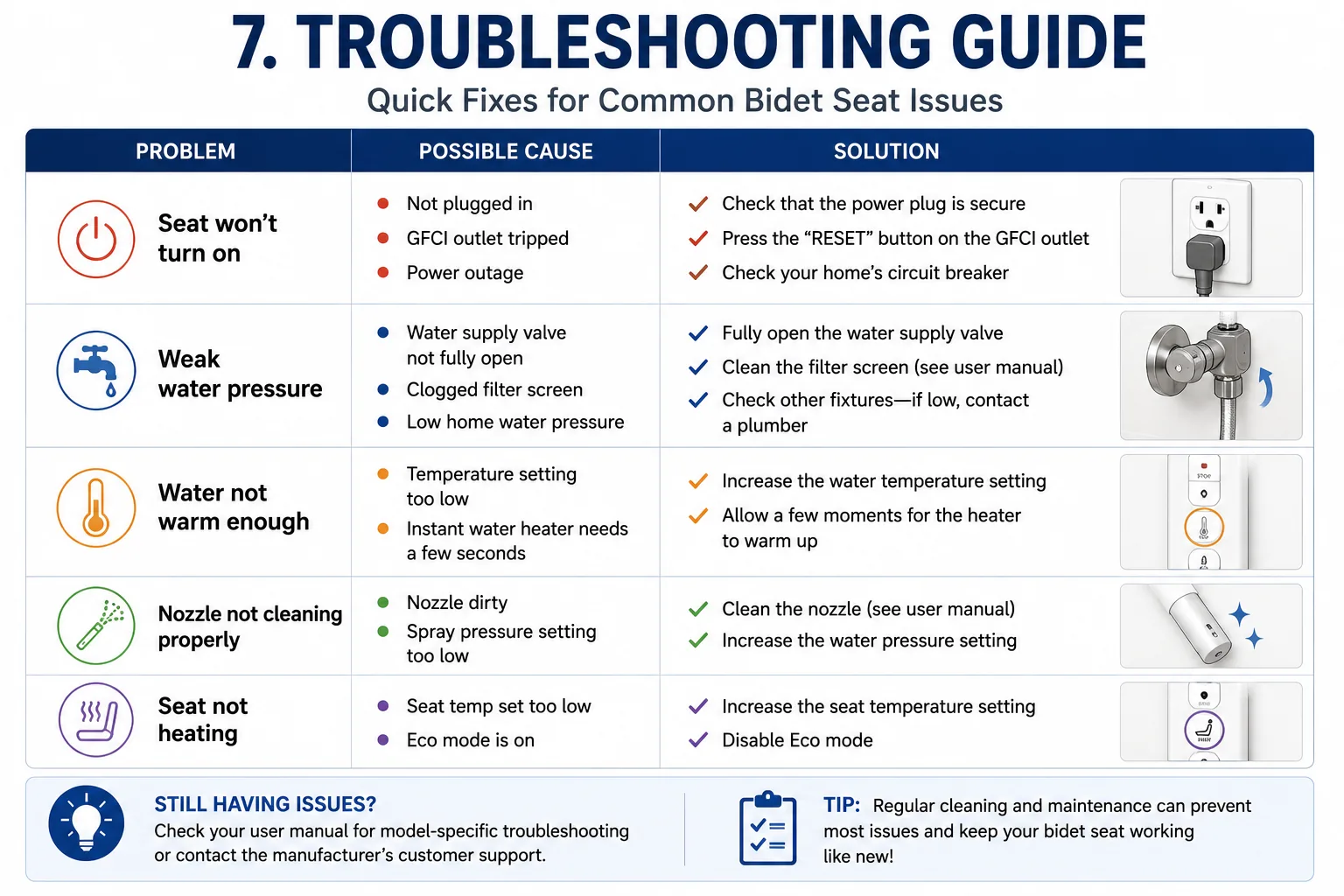
Make sure the shutoff valve is open, the hose is not kinked, the nozzle is not blocked, and the seat sensor or power setting is not preventing operation.
Weak or uneven pressure
Check pressure settings, nozzle cleaning, inlet screens if included, hose bends, and whether household water pressure changed.
Cold water on an electric seat
Check temperature settings, eco mode, power, and the manual. Some models behave differently depending on heating system and usage.
Remote or control problems
Replace batteries, check the remote mount, clean around buttons, and confirm the bidet has power. For persistent errors, follow the manufacturer manual.
What to look for
- Clear fit requirements before you buy.
- Gentle pressure and an obvious stop or off control.
- Cleaning access around the nozzle, controls, and hose areas.
- A setup that matches the bathroom instead of forcing a feature list into the wrong room.
- A return policy that protects you if fit, comfort, or installation is wrong.
What to avoid
- Buying before checking outlet, fit, clearance, or plumbing.
- Choosing strong spray over controllable low pressure.
- Ignoring cleaning and leak checks on any water-connected product.
- Overbuilding a guest bathroom or underbuying the main bathroom you use daily.
Real owner notes: start with the simple causes before blaming the bidet
Across bidet troubleshooting guides and owner discussions, the same issues come up repeatedly: weak spray, no spray, leaks at the T-valve, a remote that seems dead, water that is not heating, a dryer that feels weaker than expected, and nozzles that need cleaning. Many of these problems are not catastrophic product failures.
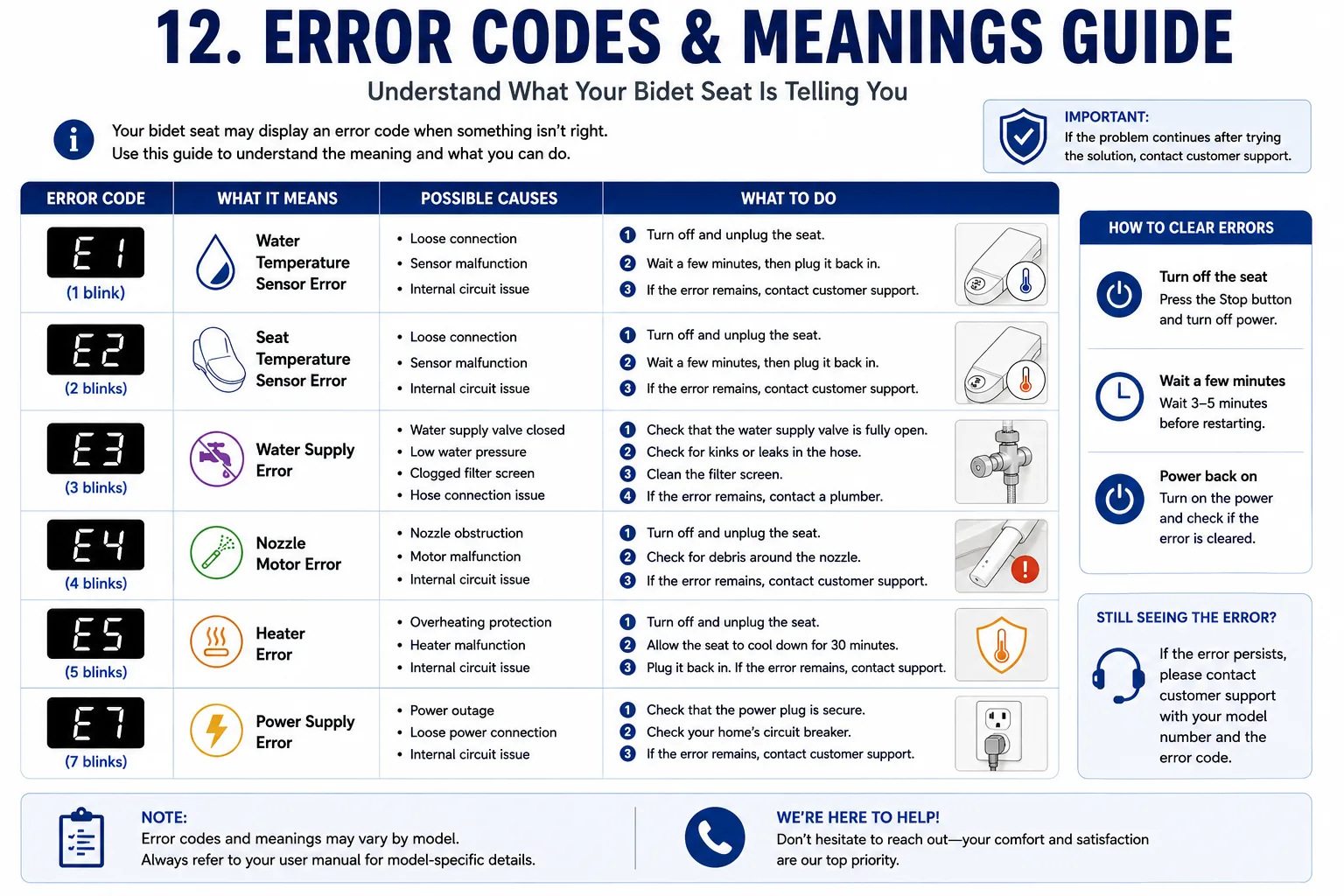
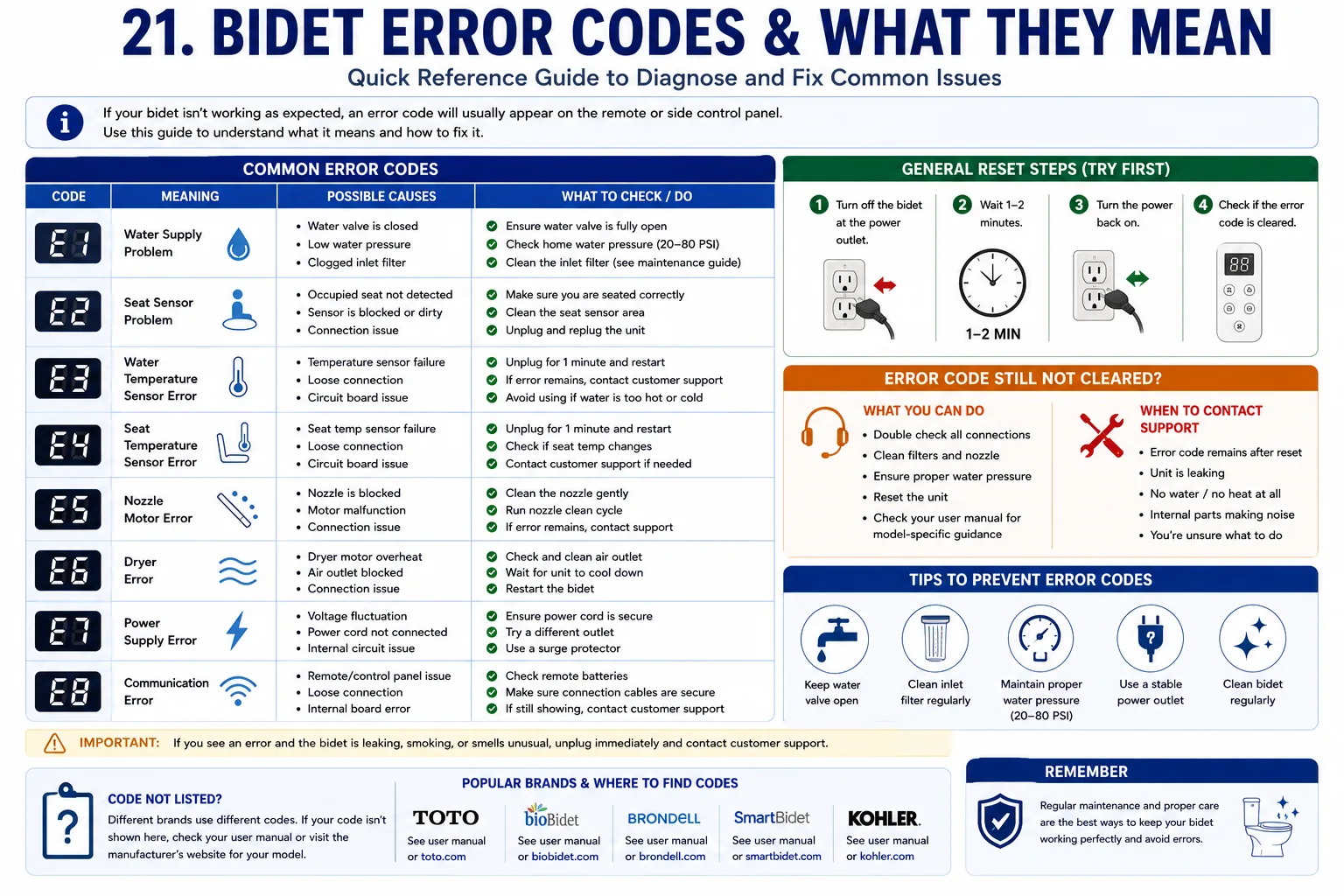
For non-electric attachments, the first checks are water supply, kinked hose, T-valve position, filter or nozzle blockage, and pressure setting. For electric seats, add outlet/GFCI power, occupied-seat sensor, remote batteries, eco mode, water-temperature setting, and whether the unit needs a reset. The boring checklist solves more problems than most owners expect.
The owner lesson is to separate comfort complaints from actual failures. A dryer that takes longer than toilet paper is often normal. Warm water running cool can be normal on reservoir models. A seat not responding may be the sensor or remote battery. A leak, burning smell, repeated electrical fault, or damaged supply part is different: stop using it and get the manufacturer, plumber, or electrician involved.
- Check first: shutoff valve, hose kinks, filter/nozzle cleaning, remote batteries, power outlet, seat sensor, temperature settings, and eco mode.
- Stop and get help for: active leaks, damaged hoses, electrical smells, tripped outlets that repeat, or parts that will not thread cleanly.
- Human takeaway: most bidet issues are small, but water and electricity are not places to improvise.
Where this leaves you
Troubleshooting should start with simple checks: water, power, settings, hoses, nozzles, batteries, and leaks. Stop and use the manual or a professional if water or electrical safety is involved.
Related guides
FAQ
Why is my bidet not working?
Common causes include closed valves, kinked hoses, low settings, blocked nozzles, weak remote batteries, no power, or leaks.