Troubleshooting
Weak Bidet Spray Troubleshooting
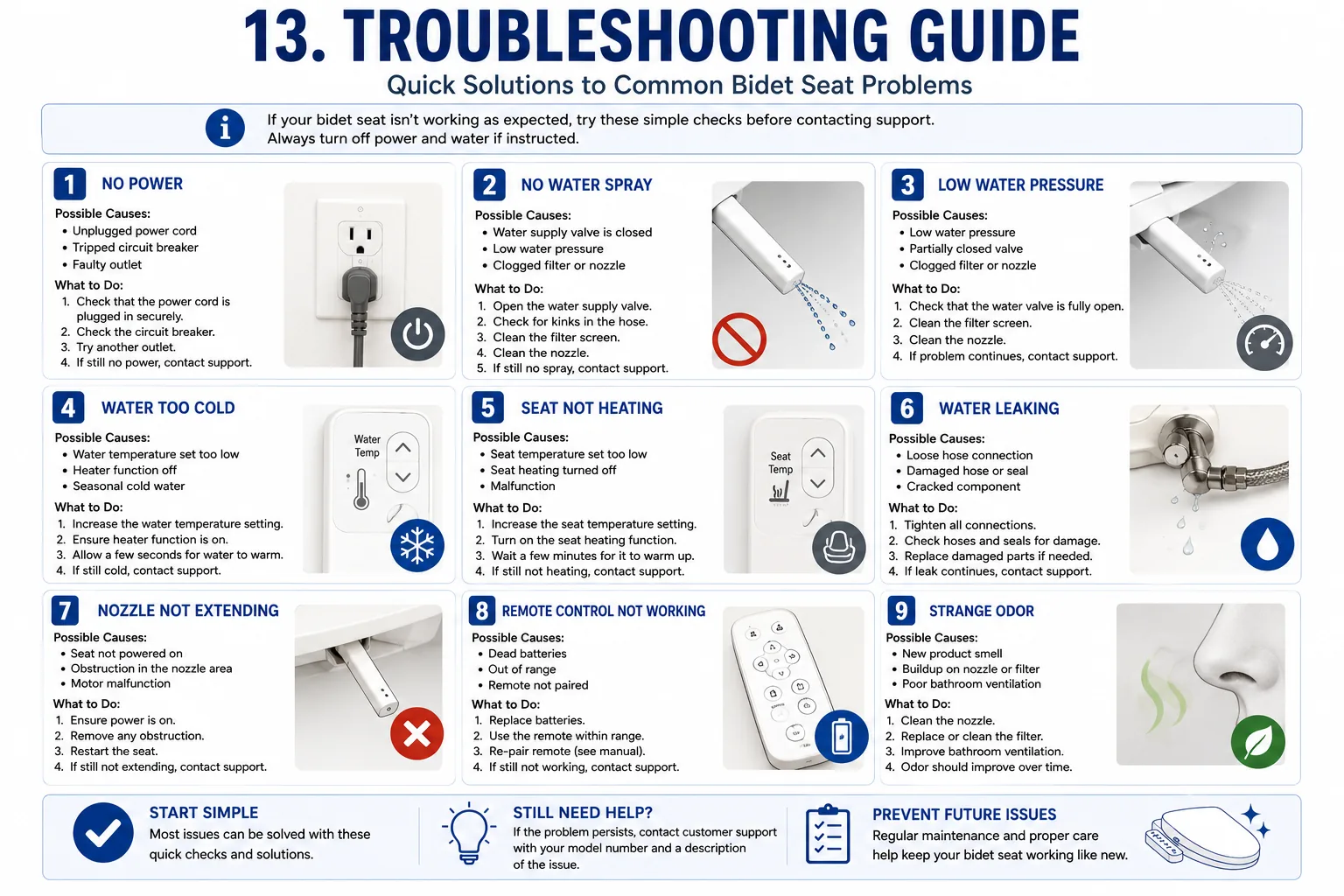
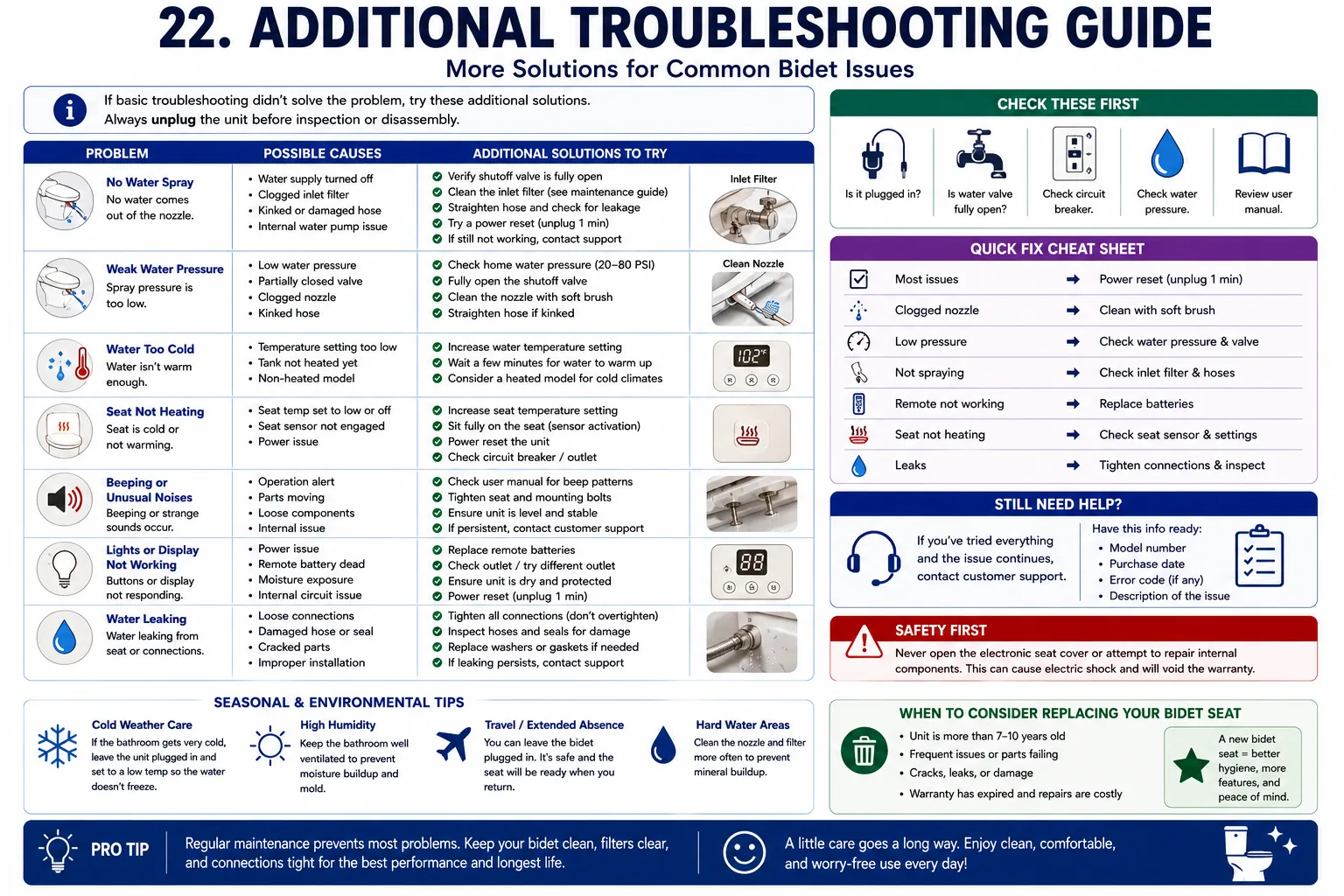
Weak bidet spray does not always mean the bidet is broken. It can come from settings, water supply, nozzle buildup, kinked hoses, filters, or installation issues.
BestBidets may earn a commission from qualifying purchases. Product details can change; confirm current specs, fit, and safety information with the manufacturer or retailer before buying.
What to know first
Start with simple checks: pressure settings, shutoff valve position, kinked hoses, nozzle cleaning, filters/screens if included, and whether the issue started after installation or cleaning.
Quick picks
| Situation | Best direction | Why it matters |
|---|---|---|
| New install | Check valve and hose | May be partial water flow |
| Older bidet | Clean nozzle | Buildup can affect spray |
| Electric seat | Check settings | Remote/eco/settings may change |
| After maintenance | Check kinks | Hose may have moved |
How to choose
Use this section as a quick fit check before comparing brands. The right choice depends on the bathroom, the outlet situation, toilet shape, plumbing condition, and who will use the bidet most often.
Start with settings
Electric bidets may have pressure settings, user presets, or modes that make the spray feel weaker than expected.
Check the water path
A partially closed shutoff valve, kinked hose, clogged filter, or poorly seated T-valve can reduce flow.
Clean the nozzle
Nozzle buildup or a blocked spray opening can weaken or misdirect the stream.
What to look for
- Fully open shutoff valve.
- No kinked hoses.
- Clean nozzle and guard.
- Filters/screens checked per manual.
- Correct pressure settings.
What to avoid
- Disassembling electric parts without the manual.
- Overtightening fittings.
- Ignoring new leaks.
- Using sharp tools on nozzles.
- Assuming weak spray always means replacement.
- Start with the shutoff valve and T-valve before touching the seat.
- Look for kinked hoses behind the toilet, especially in tight bathrooms.
- Clean the nozzle and filter screen if the pressure declined slowly over time.
- For electric seats, confirm the pressure setting has not been lowered by a user preset.
The useful owner lesson is to diagnose from the wall toward the nozzle. Check the shutoff valve, supply line, T-valve, filters, and nozzle before assuming the seat needs repair. Electric seats can also feel weak when a cleaning mode, eco mode, or user preset has reduced pressure.
Weak spray complaints usually start with people assuming the bidet itself is defective. In owner discussions and troubleshooting guides, the more common pattern is simpler: a partially closed shutoff valve, a kinked hose, a clogged filter, mineral buildup at the nozzle, or a T-valve that was not fully opened after installation.
What owners usually discover first
The useful pattern is not just whether people like the idea of a bidet. It is what they still appreciate after the first week, what becomes annoying, and which setup details create problems in a real bathroom.
Final take
Weak spray is often a settings, cleaning, or water-flow issue. Work from simple checks to manual-guided troubleshooting, and call the manufacturer or plumber when water connections are involved.
Related guides
FAQ
Why is my bidet spray weak?
Common causes include low settings, kinked hose, partial valve, nozzle buildup, or clogged filter.
Should I take the bidet apart?
Only follow the manual; do not guess with electric or pressurized parts.
Can cleaning fix weak spray?
Often, especially if buildup is blocking the nozzle.